Tag Archives: Renee Dinnerstein

Educators Thoughts On Teaching the Way Children Learn


A group of educators recently decided to meet on Zoom to discuss what we could do about the disturbing direction of Early Childhood education in the New York City public schools.  Years that should be filled with opportunities for exploration, inquiry, social interaction and play have turned into days filled with scripted, direct instruction. This leaves very little, and in many cases, no, opportunities for joyful, engaged learning and informative, insightful and fulfilling  teaching. We have composed a proposal that we will present to Mayor-Elect Zohran Mamdani and to his eduction transition team.

Ideally, we would like our proposal to be circulated as widely as possible. To this end, we hope that you will share it with anyone who is particularly concerned with the education of  children, 4 to 8 years old.

We would also love to have your feedback.

Here is who we are .

Anna Allanbrook    (retired principal, The Brooklyn New School)

Nancy Cardwell Ph.D  (faculty member, Graduate Program in Early Childhood Education, School of Education , The City College of New York)

Renee Dinnerstein  (Early Childhood Literacy Consultant)

Beverly Falk Ed.D  (director, the High-Quality Early Learning Project and Professor/Director Emerita, Graduate Program in Early Childhood Education , The School of Education, The City College of New York)

Deborah Meier,  (founder and retired director , Central Park East schools)

Lauren Monaco  (early childhood educator and activist)

Gil Schmerler, Ed.D ( retired director.  Leadership for Educational Change, Bank Street College of Education)


                                                                Our proposal
We are a group of NYC educators – founders/principals of learner-centered schools, faculty of the City College School of Education and Bank Street College of Education, and teacher/parent activists for learner-centered education. We write to share some of our thoughts/concerns/recommendations for the NYC Public Schools that we hope the Mamdani administration will consider and put into action. While there are many structural/budgetary issues that need to be addressed, we are especially concerned with early childhood education and will focus on this – our area of experience/expertise. What follows are some of our concerns with recommendations for how to address them.

1. We believe that the NYC Public Schools (NYCPS) view of early childhood is too narrow.

Currently, early childhood – and the central administrative team overseeing it – considers early childhood to be birth – 4. The nationally recognized professional standard and developmentally-based age range for early childhood is birth – age 8. It is widely accepted in the fields of education, medicine, psychology and neuroscience that during the first 8 years of life optimal development is supported by active learning/play where children have extensive periods for choice and inquiry facilitated by teachers’ responsiveness to children’s questions, interests, and understandings. Young children learn through active involvement with materials and relationships with children and adults. Unfortunately, in too many classrooms there are no opportunities for this: no choice/work time, no materials with which to engage in educative play. Kindergartens throughout the NYC Public Schools do not have choice/work centers, blocks, dramatic play areas, trips, and/or recess. Work sheets and didactic teaching dominate the day, with brief periods of ‘playtime’ given as a reward at the end of the day. The absence of educative play opportunities in kindergarten through 2nd grade is resulting in increased incidences of anxiety and depression. Some pediatricians have noticed a significant enough pattern to call this ‘play deprivation’.
We recommend instead:
– Align the NYCPS early childhood definition with national, professional, and global standards, birth to age 8 years, specifically to include kindergarten through 2nd grade.
– Give responsibility for young children’s learning in K-2 to the NYCPS early childhood team.
– Ensure that choice/work time be a prominent part of every early childhood classroom where children can make choices, engage in inquiry.
– Ensure early childhood classrooms be amply provisioned with materials for active learning, including (but not limited to) blocks, manipulative materials, dramatic play equipment, books, and art supplies.
– Ensure all children have at least an hour of outdoor play/recess each day

2. We are concerned about the damaging effects of the mandated, scripted curricula implemented in all grade levels.

Developmental and neuroscience research have established the importance of educators’ responsiveness to children’s interests, questions, cultural and linguistic backgrounds. A scripted curriculum does not allow opportunities for the “serve and return” exchanges that neuroscientists point to as critical for optimal brain development. Further, the scripted, generic curriculum doesn’t provide the necessary responsiveness to the diversity of children’s and families’ backgrounds, because the mandated, scripted curriculum does not connect to the children’s backgrounds/contexts/languages. Children and teachers are required to be passive recipients of external forces, rather than dynamic and active participants in their learning as promoted by neuroscientists, psychologists, and pediatricians. Additionally, millions of dollars are being spent on purchasing and enforcing use of these curricula that could be better spent in ways we suggest below.
We recommend instead:
– Center curriculum development around national/state/district/professional standards, for example, those of the National Association for the Education of Young Children
(NAEYC).
– Collaborate with community-based teachers’ and parents’ groups to choose/shape/develop their own curricula that is relevant/connected to the contexts of children’s lives.
– All curricula should be mapped to demonstrate the coverage and alignment with national/state/district/professional standards.
– Offer ongoing, substantive professional development to support educators’ content and pedagogical knowledge to sustain young children’s learning and optimal development.
And/or
– Offer pre-developed curricula, as guides, that integrate young children’s diversity of experiences/languages/cultures, making it clear that the curricula are guides, not mandates.
– Offer ongoing professional development to assist educators in how to be responsive to children’s interests, questions, different strengths and modes of inquiry, cultural/racial/linguistic backgrounds
– Provide active learning/play-based environments that will develop young children’s academic skills, content knowledge, social emotional learning and critical thinking skills to help them distinguish between facts and misinformation.
– Provide time in the school day for young children to exchange ideas, learn to listen to and be respectful of others, and reposition children as well as the teacher as resources for learning in the classroom.
– Provide time for conversations and relationships in the classroom to support the development of empathy and understanding toward others that are critical to learn about and sustain a democratic community in the classroom in preparation for life-long, active civic engagement. For example, in Denmark all children aged 6-16 years have a period in their school day focused on the development of empathy toward others. This contributes to the fact that they are ranked internationally as the happiest society in the world.

3. We are concerned about the reading programs that do not reflect the consensus research from developmental psychologists and neuroscientists about how children learn to read.

We are further concerned about the lengthy periods of time spent on worksheets, passive instruction on phonics, phonemic awareness, and decontextualized skills at the expense of meaning making and other elements of literacy development. Neuroscience advocates for a dual focus on meaning-making elements (content and experience-based knowledge, children’s interests, culture/linguistic backgrounds) in addition to decoding elements (phonics, phonemic awareness, alphabet knowledge etc. See chart below.
We recommend instead:
– Expand the notion of reading development beyond phonics by adding the extensive rich supply of children’s literature to skill instruction in order to capture children’s interests and excitement that has been proven to enhance the literacy learning process.
– Infuse literacy learning into active, project-based learning experiences across all content areas, both fiction and non-fiction. We also urge the use of ‘functional literacy development’ that includes making signs in the block area, writing lists, letters, and labels in dramatic play areas, using charts to document children’s comments, questions, ideas and understandings, and pointing out awareness of environmental print, etc.

4. We are concerned about the overuse of testing that does not support children’s learning and that consumes inordinate amounts of educators’ time.
We recommend instead:
– Encourage and support educators’ use of professional development standards-based performance assessments and multiple forms of data collections mapped to standards. This can include portfolio collections of children’s work, documented observations, and the use of developmental continua mapped to professional, national, state, and district standards. This approach was developed in NYS in the 1990s and early 2000’s and has data to back up its efficacy.

5. We are concerned about the overuse of screens and artificial intelligence in schools.

Developmental and neuroscience psychologists along with pediatricians warn against screen time for children, especially young children under 9 years old. Neural connections that are the brain structures that support learning are consolidated quickly and effectively with ‘serve and return’ relational and in real-life interactions rather than through abstracted online/digital encounters. Additionally, artificial intelligence can be deceptive and keep children from developing the social emotional and relational intelligence necessary for sustained relationships throughout the lifespan as well as developing the skills they need to be critical thinkers and distinguish reality from misinformation.
We recommend instead:
– Limit screen time and the use of artificial intelligence to encourage real-life, in-person interactions that support learners to learn how to be critical thinkers and to distinguish fact from fiction. Limiting screen time is an important support to help children develop social emotional learning to support interactive and project learning.
– Provide ongoing professional development to help educators develop ways to harness technology in developmentally supportive ways to nurture healthy brain development and learning.

6. We are concerned that large numbers of children and families in NYC schools are unhoused, suffer from food insecurity, and/or are in need of comprehensive supports to survive.

Additionally, we see a need for schools to attend to the voices and concerns of parents/families/caregivers in the community and involve them in the learning life of the school.
We recommend:
– Reintroduce the community school model that utilizes the resources of community-based organization such as the Children’s Aid Society to provide the necessary supports like access to food, housing, health screening, vaccines, dental care, hearing exams, eye exams all critical for children’s academic success.
– Create collaborative governance structures that give voice to parents/families/caregivers/community concerns in decisions about the education of their children.

Respectfully submitted (in alphabetical order):
Anna Allanbrook, retired principal, the Brooklyn New School
Nancy Cardwell, Ph.D., faculty member, Graduate Program in Early Childhood Education, School of Education, The City College of New York
Renee Dinnerstein, early childhood literacy consultant
Beverly Falk, Ed.D., director, The High-Quality Early Learning Project and Professor/Director Emerita, Graduate Program in Early Childhood
Education, The School of Education, The City College of New York
Deborah Meier, founder and retired director, Central Park East Schools
Lauren Monaco, early childhood educator and activist
Gil Schmerler, Ed.D., retired director, Leadership for Educational Change, Bank Street College of Education

Teaching Kindergarten: Where Did the Garden Go?

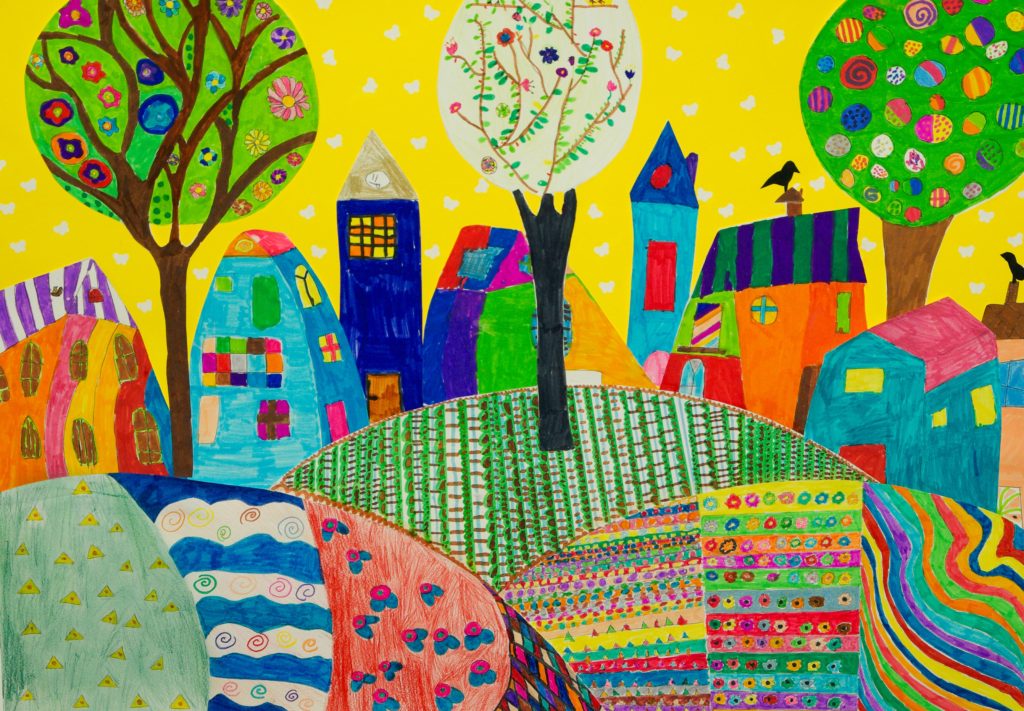
childrens-drawings-716340_1645

Finally, an amazing and much-needed Kindergarten Conference will be hosted at the Bank Street College of Education on April 21 and 22. If you’re a kindergarten teacher, work with kindergarten teachers or have a particular interest in kindergarten, I would encourage you to sign up for the conference ASAP!
Teaching Kindergarten: Where Did the Garden Go? Practice, Policy, and Advocacy

Join other kindergarten teachers, school leaders and policy makers as we revisit and celebrate the unique and vital role of Kindergarten in the life of the child. Inspiring keynote speakers will present current research on learning and development and its implications for Kindergarten practice.

Workshop leaders will engage you in interactive sessions on literacy, math, social studies, block building, family engagement, music and science, among others. All workshops will address working with English Language Learners, children with special needs, the rich diversity of our students and the Common Core State Standards. Participants will leave the conference reinvigorated and inspired to strive for what is right for all Kindergarten children.

Featured Speakers

Friday, April 21
Keynote: A Meaningful Kindergarten for ALL children | Dr. Derrick Gay
Guest Speaker: Who is the 5 year old? | Lesley Koplow
Guest Speaker: The Power of Song in Kindergarten | Betsy Blachly and Susan Harris

Saturday, April 22
Keynote: What is Happening to our Children’s Garden? Reflections on Kindergarten in a Changing World | Dr. Beverly Falk
Keynote: Transforming Kindergarten: Supporting Teachers to Strengthen Quality | Dr. Shannon Riley-Ayers
Special Interview: Joining with the Kindergarten Learner | Yvonne Smith interviewed by Julie Diamond

Morning Workshops

Upon Registration for the conference, you will be asked to select one morning workshop from the list below.

Morning Workshops Descriptions

1. Block Building Basics: Making the Most of Your Block Area | Facilitator: Rebecca Burdett
2. Creating Environments, Routines, and Curricula to Support Kindergarten Learning: Forging Links between Personal Content and Learning | Facilitator: Julie Diamond
3. Embracing Differences in Kindergarten | Facilitator: Dr. Derrick Gay
5. Facilitating Social-Emotional Development through Movement in the Kindergarten Classroom | Facilitator: Diane Duggan
9. The Importance of Family Engagement | Facilitator: Maimuna Mohammed
10. The Importance of Play in Kindergarten | Facilitator: Joan Almon
12. Museum Studies in Kindergarten | Facilitators: Margaret Blachly and Andrea Fonseca
14. Science Exploration in Kindergarten: Curiosity, Enthusiasm, and a Love of Learning! | Facilitator: Michael Ziemski
15. Storytelling/Story Acting: Bringing Vivian Paley’s Methodology into Kindergarten | Facilitator: Suzette Abbott

Afternoon Workshops

Upon registration, you will be asked to select one afternoon workshop from the list below:

Afternoon Workshop Descriptions

4. The Essential Role of Trips in the Kindergarten Curriculum | Facilitator: Salvatore Vascellaro
6. Finding the Courage to Bring Kindness and Compassion Back to the Garden | Facilitators: Kelly D’Addona, Laura Morris, and Dr. Cynthia Paris
7. Friendship, Fear, Fairness, and Fantasy at Five: What Makes Vivian Paley’s Kindergarten Vision So Stubbornly Relevant in All Settings? | Facilitator: Dr. Patricia M. (“Patsy”) Cooper
8. How Curiosity Drives an Investigation: The Wheelchair Study and the Aviation Project | Facilitator: Dana Roth and Renée Dinnerstein
11. Literacy and Art, Building the Bridge | Facilitator: Denise Prince
13. From Read-aloud to Retelling: Planting a Story Garden in Kindergarten | Facilitator: Nina Jaffe
16. What’s New in Children’s Books for the Kindergarten Classroom? | Facilitator: Mollie Welsh Kruger
17. Working with English Language Learners in Kindergarten | Facilitators: Tatiana Rosa and Antonia Bendezu

Register
April 21: 4:00 – 8:30 pm
April 22: 8:00 am – 4:00 pm

Bank Street College of Education
610 West 112th Street, NYC 10025
Register Now 

To pay by Purchase Order, complete a registration form for each participant and fax the PO and registration form(s) to 212-875-4777.
Partial SCHOLARSHIPS are available. Apply here. (Scholarships are reviewed on a first-come, first-serve basis until funds are depleated.)

Conference Fee:
$195* Early Bird fee (through March 15, 2017)
$265* Conference fee (after March 16, 2017)

1 graduate credit may be earned by paying the tuition fee, $1525 (includes conference fees)
*Includes Friday dinner, Saturday light breakfast
Earn 12 CTLE hours or 1 CEU included with conference fees

Register Now

To pay by Purchase Order, complete a registration form for each participant and fax the PO and registration form(s) to 212-875-4777.
Partial SCHOLARSHIPS are available. Apply here. (Scholarships are reviewed on a first-come, first-serve basis until funds are depleated.)

We wish to thank Community Playthings for their support.

Conference Location:
Bank Street College of Education
610 West 112th Street, New York, NY 10025

This conference was created and developed by:
Betsy Grob
Betsy currently advises students at City College of New York and served on the faculty of Bank Street College for over twenty years. Betsy has taught kindergarten, first grade, and Spanish in both New York City and Colorado and has worked with early childhood educators in many countries including Sierra Leone, Chile, Romania, Mongolia, and Azerbaijan. She is co-author of The Right to Learn: Preparing Early Childhood Teachers to Work in High-Needs Schools (Bank Street College Occasional Paper Series) and is co-editor of Teaching Kindergarten: Learner-Centered Classrooms for the 21st Century (Teachers College Press, 2015). Betsy holds an MS and an EdM from Bank Street College.

Fretta Reitzes
Fretta, an educational consultant, was the founder and director of the Wonderplay Conference at the 92nd Street Y in New York City from 2006-2016. She was the director of 92Y’s Goldman Center for Youth & Family from 1990-2016 and was director of the Y’s Parenting Center from 1980-1990. Before her tenure began at 92Y, Fretta taught preschool, kindergarten, and first grade in New York City and New Jersey and trained daycare teachers and directors in Bridgeport, Connecticut. She is the co-author of Teaching Kindergarten: Learner Centered Classrooms for the 21st Century (Teachers College Press, 2015), Wonderplay (Running Press, 1995), Wonderplay, Too! (Running Press, 2005), and The Right to Learn: Preparing Early Childhood Teachers to Work in High-Needs Schools (Bank Street College Occasional Paper Series).

Conference Registration
Register Now
Contact CPS to register with a PO
email: cps@bansktreet.edu
tel: 212-875-4707 or
fax:212-875-4777

Transporting a Classroom Towards Inquiry

I could almost hear a chorus of silent groans coming from the teachers sitting around the table in the staff room at P.S. 10 in Brooklyn. It was March 17th, 2005, my first day working as a consultant at the school. The new principal, Jett Ritorto, wanted me to introduce inquiry projects and investigative Choice Time to the kindergarten teachers. But it was mid-March and this was just one more new addition to their already over-programmed day. I wasn’t welcomed with open arms!

“We can’t do an inquiry project. This is when we start our transportation unit.”
I recognized this plea from my own not-so-long-ago days in the classroom. I had my theme, my materials, and my time-schedule all set up and then, in would walk a new staff developer with her own agenda, turning all of my plans upside down.

I assured them that we would not be dropping the transportation unit. Instead we would see what happened if we approached it in a new way. I suggested that they each go on a neighborhood walk with their class that week, with a focus on exploring the different ways that people could travel, to, from, and around their neighborhood. After the walk, they should encourage children to share their observations. This would give the teachers a sense of what the students already know and also what form of transportation seemed to interest them the most. That would allow them to narrow the focus of the class’s transportation study.

When I came back to the school the next week, I met with each teacher individually. The inclusion team, Dana Roth and Karen Byrnes, were excited and eager to share their experience with me. Their children had lots of questions about the subway and that was where they wanted to focus their study. The three of us spent the rest of the period preparing an anticipatory web, plotting out the many possibilities for a subway study. All seemed well.

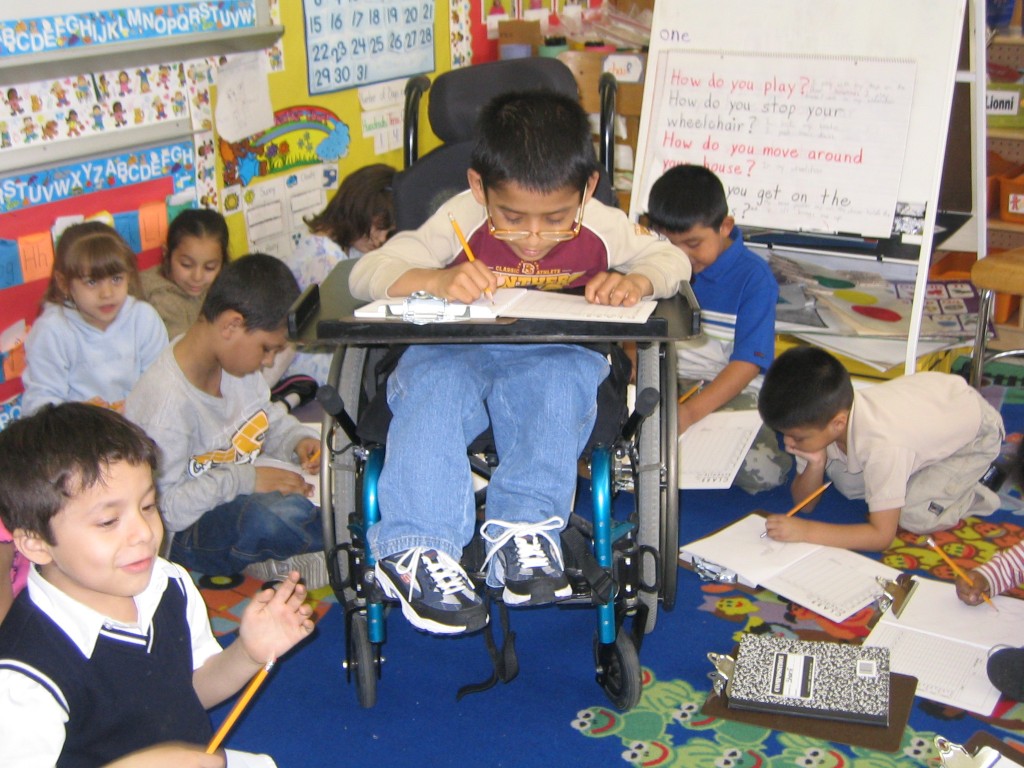
Later in the week they contacted me and sadly told me that a subway study was out of the question. One of the students was confined to a wheelchair and would have to be excluded from all subway trips. They decided to switch to a bus study. I suggested, however, that they first bring the problem to the class and see what kind of solution the children came up with.

The children were outraged! “That’s not fair! Saim should be able to go on the subway just like us!” Here began a most unusual transportation study – The Wheelchair Project.

The class decided to find out more about Saim’s wheelchair and what it was like for him to move around the school and neighborhood. Saim was pleased as punch to be the center of attention (Dana said that she would not have pursued this route if the child was sensitive about being singled out).

They began the study by interviewing Saim. After the interview, they all sat around him in a circle, observing and drawing. The teachers began webbing what children already knew about wheelchairs and also collecting their “wonderings” on post-its and adding these to the web. From these activities, they decided to focus their study on movement and accessibility. These were the two areas where the children had the most interest.

News about this unusual transportation study traveled around the school like hotcakes. When the school’s physical therapist heard about the investigation, she provided the class with an unused wheelchair. This became a very popular wheelchair observation center. Children used magnifying glasses, tape measures, and detail finders (a square of black paper with a peek-hole cut in the center) to look closely at the different parts of wheelchair. They drew the wheels, the brakes, and the gears. Then they shared their drawings and ‘recordings’ with the children in the block center who were constructing their own version of a wheelchair. This chair took many days to construct. It sometimes fell over and was rebuilt often and eventually was held together with yards of masking tape!


The class visited the school bus that brought Saim to school to see how the lift helped children with walkers and wheelchairs get on and off. They interviewed the driver and also met Manny, a very affable upper-grade child who used a walker to help him move about. Manny was invited to the classroom where he was interviewed. He then gave each child an opportunity to try out his walker.

After this experience, a lift-bus was built in the block center. After a few days, it was deconstructed and the children built “a better lift bus.”

They walked took neighborhood walks, checking to see which stores and sidewalks were “wheelchair friendly.” Then they walked around the school to find out if their school was wheelchair accessible. The front of the school had lots of steps! How did Saim get into school? In an exciting moment of discovery, they found the symbol that they saw on the lift bus, along with an arrow. The class followed the arrows until they came to the ramp entrance. Problem solved!

They visited a neighborhood house that had been altered to make it wheelchair accessible and they interviewed the owner of the building.

This study certainly held the interest of the class and raised a new awareness of the challenges in Saim’s daily life. The children developed a feeling of respect for Saim and for the other children in the school who used wheelchairs, walkers and crutches.

Over the years, I have returned to the school to visit Dana Roth and I’ve always been intrigued by the variety of studies taking place in her classroom. On one visit, the children were investigating colors – inventing colors, exploring the various names of Crayola crayons and coming up with their own inventive names for their newly mixed colors. On another visit, the children were building a school in their dramatic play center, reflecting their investigation of their own school. Dana still does some thematic studies but she also listens closely to her children and develops inquiry projects based on their interests and wonderings.

I haven’t worked at the school for the past five years, but I’m going back in the fall to, as Laura Scott, the new principal, says, “Give a refresher course” in inquiry studies to keep it alive and well at the school. Let’s see what happens.